There’s a concept in organizational psychology called tacit knowledge: expertise that can’t be written in a manual because it only exists in the mind of the person who lived it. Most companies lose this knowledge eventually, when someone leaves, or when nobody ever sits them down and asks what they actually know.
We’ve built a team of people who are good at their jobs in a way you only earn by solving real problems under pressure, and figuring out, through trial and error, what holds up once a project is moving.
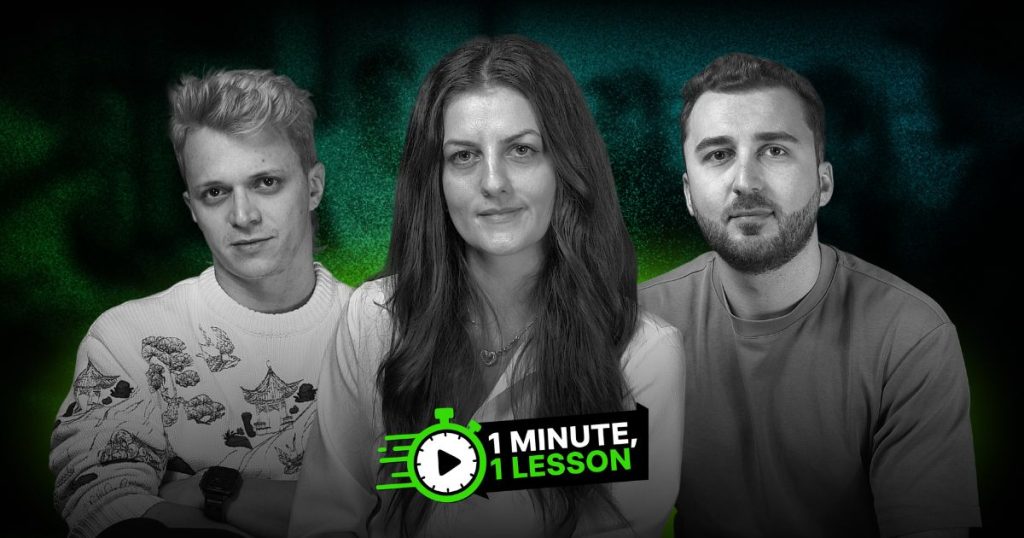
And since tacit knowledge only moves when someone’s willing to say out loud what they’ve learned, our series called 1 Minute, 1 Lesson is built on exactly that: one person, one minute, one insight from the people doing the work every day.
Be curious beyond your lane
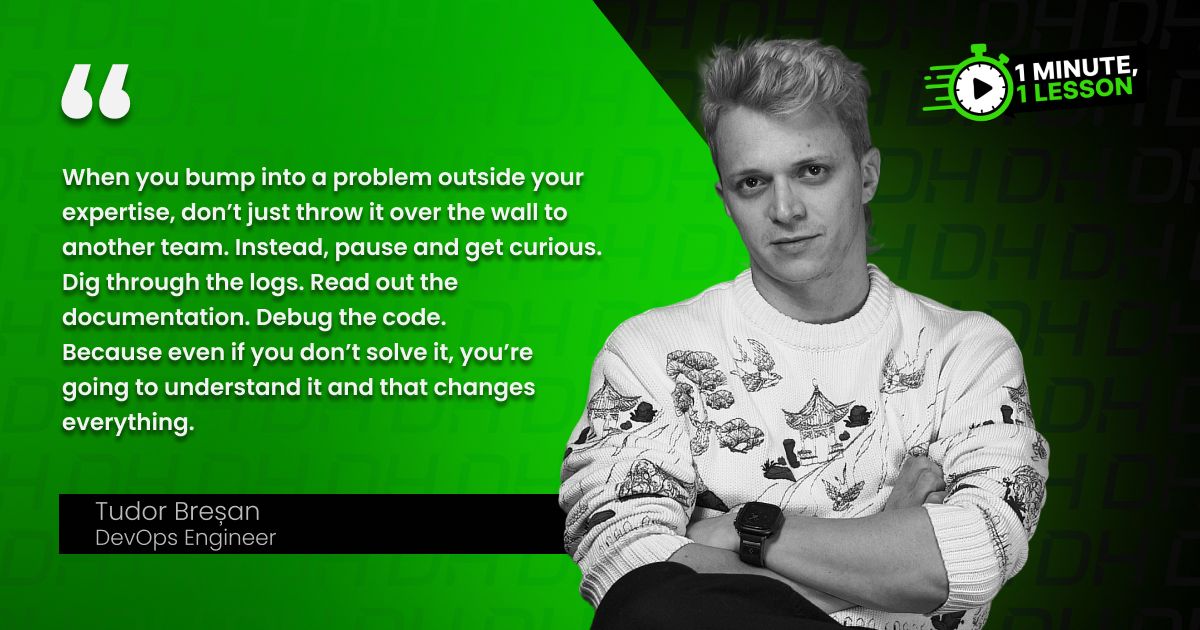
Tudor, our DevOps Engineer, shares his key lesson as an experienced professional in tech: the most valuable skill isn’t coding faster, but developing curiosity about problems beyond your own responsibilities.
When something breaks outside your lane, the easy move is to hand it off. But pausing to dig in, reading the logs, poking at the code, and understanding what went wrong changes the quality of every conversation that follows. So instead of saying “it’s broken,” you get to say “here’s where I think it breaks, and here’s why.”
And over time, people notice. That’s what turns someone into the person others go to, the one who understands how the pieces connect.
Build frameworks that outlive you
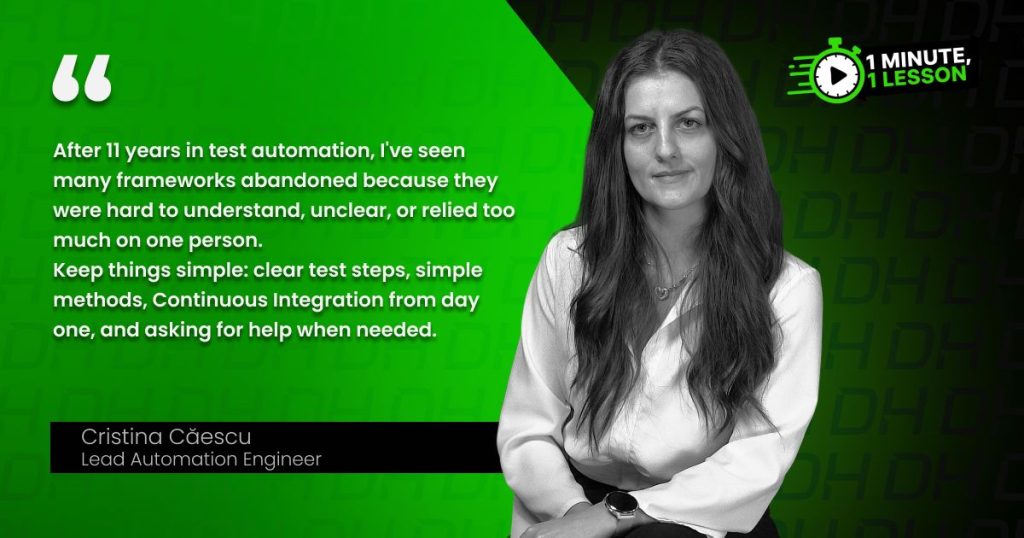
After 11 years in automation testing, Cristina, who is our Lead Automation Engineer, has noticed a pattern: frameworks get abandoned for reasons that have nothing to do with the tools. Playwright, Cypress, Selenium weren’t the problem. The real issues were frameworks that were hard to understand, sometimes hardcoded, unclear, or built around one person, so nobody else on the team could pick up the work.
If you want yours to last, it doesn’t take much: write clear test steps, keep methods easy to read, set up continuous integration from day one, and ask for help when you need it. The job, as she puts it, is to make things simpler and work effectively, not to push harder.
Know when to say no
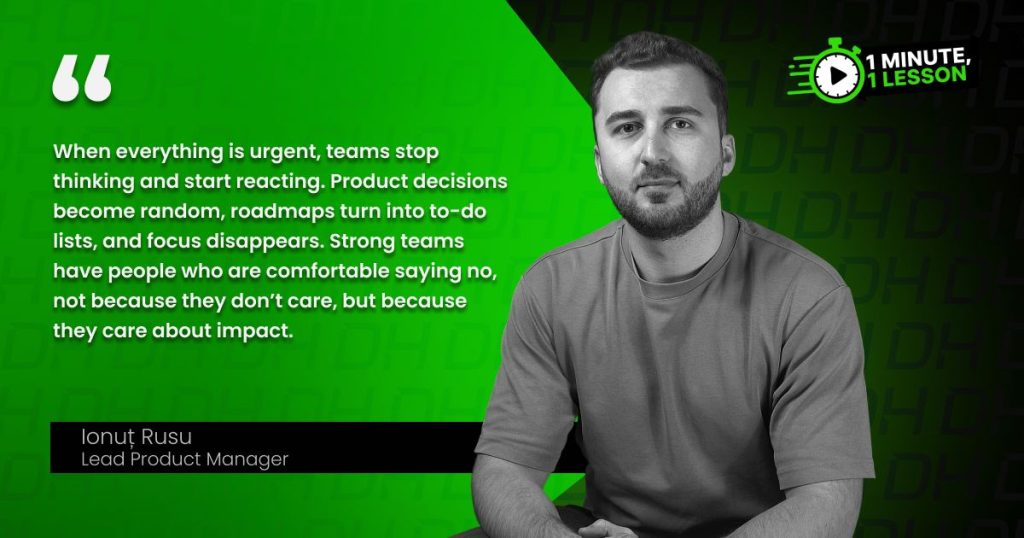
You’ve probably heard it in a meeting: everything is urgent, we need it now. Ionuț, Lead Product Manager, would push back on that. What looks like urgency is usually just a lack of prioritization, and what you get instead is chaos. Teams stop thinking and start reacting. Decisions get made at random, roadmaps turn into to-do lists, and focus disappears. Eventually the product stops scaling, and the business stops scaling with it.
If you want to avoid that, get comfortable saying no. The teams that hold up are full of people who do that, and who do it because they care about the impact of what gets shipped.
Final thoughts
Tudor stays curious about problems that aren’t his job, Cristina builds frameworks other people can pick up, and Ionuț protects his team’s time by knowing what to turn down. None of that comes from a manual. It comes from being in the work long enough to find out what the shortcuts cost, and it only gets passed on when someone’s willing to say it out loud.
There’s more of that knowledge sitting with the people around us, and more of these stories on the way. Until then, you can watch the current ones here.