
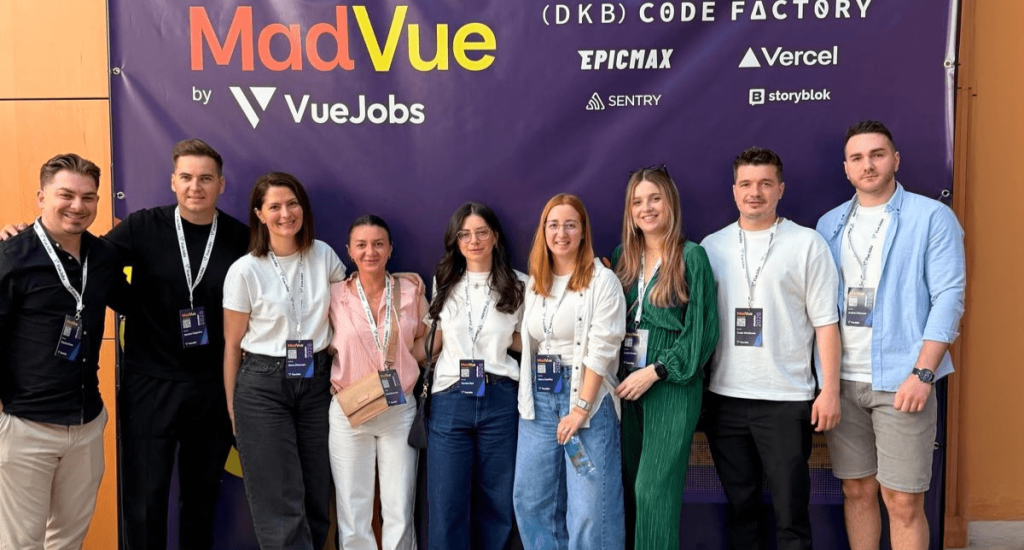
When a core framework ecosystem evolves, addressing architectural shifts early directly protects a team’s long-term development velocity. With that goal in mind, a part of our frontend engineering team recently traveled to Madrid for MadVue 2026.
As Europe’s main gathering for the Vue and Nuxt communities, the event brought together hundreds of developers alongside the core contributors actively shaping the ecosystem. Being there allowed our team to align our own technical roadmap with the long-term vision of the people building the frameworks.
The talks skipped the syntax-level updates and went straight for the structural shifts: build tooling, AI integration patterns, and routing changes that will affect production code in the near term. We’ve rounded up the most important announcements, technical shifts, and practical takeaways from the event below.
The JavaScript build toolchain is moving to Rust
Vite and Vitest are gradually replacing their JavaScript internals with Rust-based tooling. Rolldown is taking over the bundling layer, and Oxc is handling parsing and transformation, both delivering noticeably faster build times compared to what we have today. The migration from Vite to what’s coming in Rolldown and Vite 7+ will have a direct impact on existing projects, so it’s something to track closely rather than treating it as a future upgrade to deal with later.
The realities of AI-driven architecture
Around 30% of presentations addressed AI directly. The more telling observation is how it appeared as background context in almost everything else, woven into how speakers framed problems rather than treated as a dedicated topic. The conversation had moved past “AI will replace this” and “here’s your AI tool of the week.” Speakers were working from the assumption that AI is already part of the stack, and the interesting questions are about architecture, not adoption.
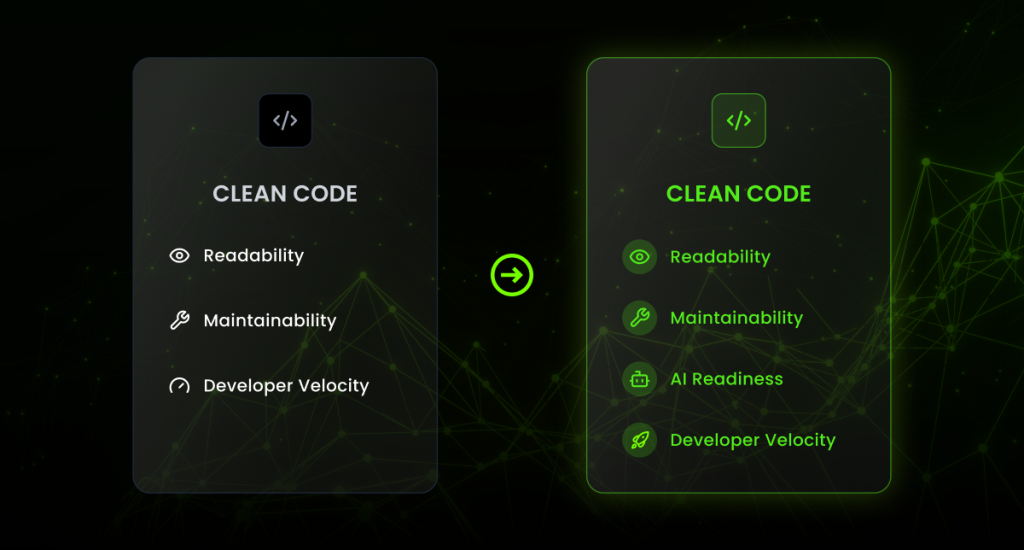
The sharpest insight from that thread: clean code has gained a second stakeholder. Well-structured functions, clear naming, and inline documentation have always made codebases easier for humans to work in. They now also make codebases easier for LLMs to work with. Code quality has a compounding return — it makes the work readable for engineers and usable for agents. That makes a codebase audit for “AI-readiness” a practical near-term exercise, covering clarity, structure, and documentation that serves both.
On the product side, adaptive UIs came up as a genuine product design challenge. Instead of covering every possible state, you define the constraints within which AI generates UI on demand. That changes how designers and frontend developers think about their collaboration surface.
Agentic learning tools also had a presence, in the form of systems that guide frontend skill development using spaced repetition and adaptive feedback. It’s an early space, but watching AI take on how developers learn, not just what they build, is worth the attention.
What changed in the Vue ecosystem
Several talks covered updates with direct implications for existing projects:
- Vue Router will get type-safe URL handling with end-to-end inference across params, query, and body. It’s a meaningful improvement, but the changes to routing and form libraries are worth reviewing against existing code before upgrading, as they can affect behavior that’s already in production
- Module Federation for Vue opens the door to micro-frontend architectures and shared components across separate applications.
- Forms got a fresh look from the creator of vee-validate, with a new component model worth comparing against your current approach.
- Real-time collaboration patterns had their own session that covered live sync in Vue, an area where production-ready patterns have been harder to come by.
Beyond individual features and tooling, some talks took a broader view of the Vue ecosystem and its future. Daniel Roe’s talk on Beyond Nuxt 4 gave a clearer picture of the framework’s roadmap and the features coming after the current release cycle. Nuxt operates as a community-driven project, and maintainer sustainability is an explicit part of that conversation. That’s relevant context for how we engage with and contribute back to the ecosystem.
What we're taking into our own work
The Vue and Nuxt communities are approaching the next few years of frontend development with genuine architectural clarity. The frameworks are maturing, the tooling is getting faster, and the conversations around AI are more grounded.
Rather than introducing entirely new priorities, the conference reinforced several areas already on our radar: a codebase audit for AI-readiness, hands-on experimentation with agentic tools beyond autocomplete, and a close eye on Rolldown and Vite 7+ release milestones to get ahead of upgrades before they become urgent.