

A few years ago, I was in a meeting where my team was asked to deliver on a goal that felt unrealistic within the timeframe. I was the only one to say so out loud, and afterward, I found myself overthinking it, worrying about the consequences of pushing back on an objective set by my manager.
I remember approaching my manager the next day, doubting the way I had expressed my opinion and position on that objective. Their response stuck with me: “I never learned anything new from people who always agree with me.” It is a mindset that still guides me today.
We talk a lot about innovation, performance, and engagement. But none of those things happen if people do not feel safe to speak up.
Psychological safety is simple in theory: people feel comfortable sharing ideas, asking questions, or admitting mistakes without fear of being judged or shut down. In reality, this is where many teams struggle.
Silence Doesn’t Mean Agreement
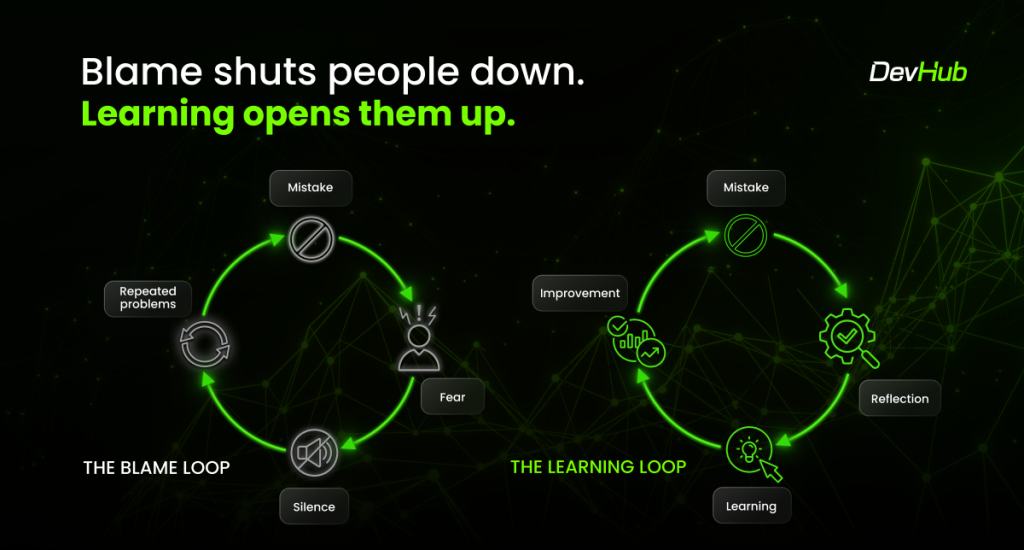
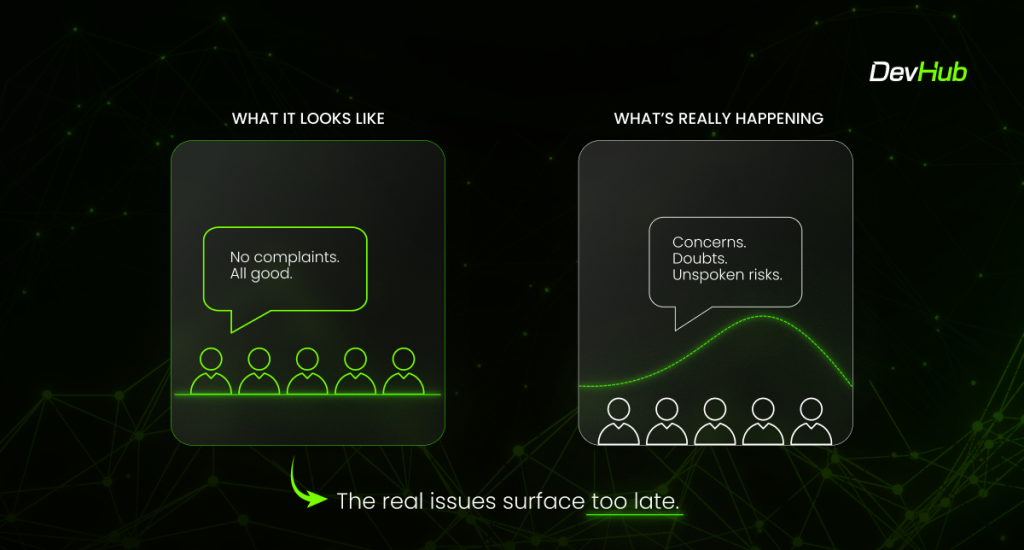
Managers too often confuse silence with satisfaction. No complaints. No pushback. Everything seems to run smoothly, and it feels like alignment. But over time, they realize something important: people were not quiet because they agreed. They were quiet because it felt safer.
From an employee’s perspective, silence is usually learned. You speak up and get dismissed. You challenge something and it backfires. So you adapt. You say less, and eventually you say nothing at all. Not because you do not care, but because you have learned not to risk it.
When people feel safe, problems surface earlier, ideas become better and more diverse, and teams move faster because issues are identified sooner. When they do not feel safe to speak up, risks go unspoken, meetings stay superficial, and the same voices and approaches continue to dominate.
For managers, this is a difficult blind spot. Things can seem to be working until you suddenly realize they are not.
Psychological safety is not built through slogans or workshops. It shows up in small, everyday moments:
- How you react when someone disagrees
- What you do when someone makes a mistake
- Whether you genuinely listen, or just wait to respond
- How you react to ideas or opinions that are out of the norm
Leaders especially set the tone. If you shut someone down once, do not expect them to try again anytime soon.
A Few Simple Shifts
Ask for input, and actually mean it
Do not just ask “Any thoughts?” at the end of a meeting. Be specific: “Is there anything we are missing?” or “What could go wrong here?” And when someone shares, do not shut it down or rush past it. If input never changes anything, people stop offering it.
Treat mistakes as learning, not blame
When something goes wrong, your reaction sets the tone. If the focus is on “Who did this?”, people will hide problems next time. A better approach is to ask:
- How can we avoid this happening next time?
- What did we miss?
- What can we learn from this situation?
That shift changes the conversation from blame to improvement.
Make space for quieter voices
In many teams, conversations are driven by the people who think out loud and jump in quickly. It is not intentional, but over time, it creates an environment where only a few voices shape the outcome.
The quieter ones are not necessarily less insightful. They often just process differently. As a manager, you can shift this without putting anyone on the spot. Share topics in advance so people have time to think. Invite input in different formats, such as written follow-ups, async comments, or one-to-one conversations.
Sometimes, the best ideas come a few minutes later, or even a few hours later.
Acknowledge people when they speak up
Speaking up is a risk. If it goes unnoticed, that risk does not feel worth taking. A simple “That is a good point” or “I am glad you raised that” reinforces the behavior.
Over time, people learn that it is safe to contribute and that their input matters.
People do not speak up because you told them to. They speak up because they feel safe enough to do it. And creating space for honest input is not just a nice-to-have. It is how teams stay connected to reality.